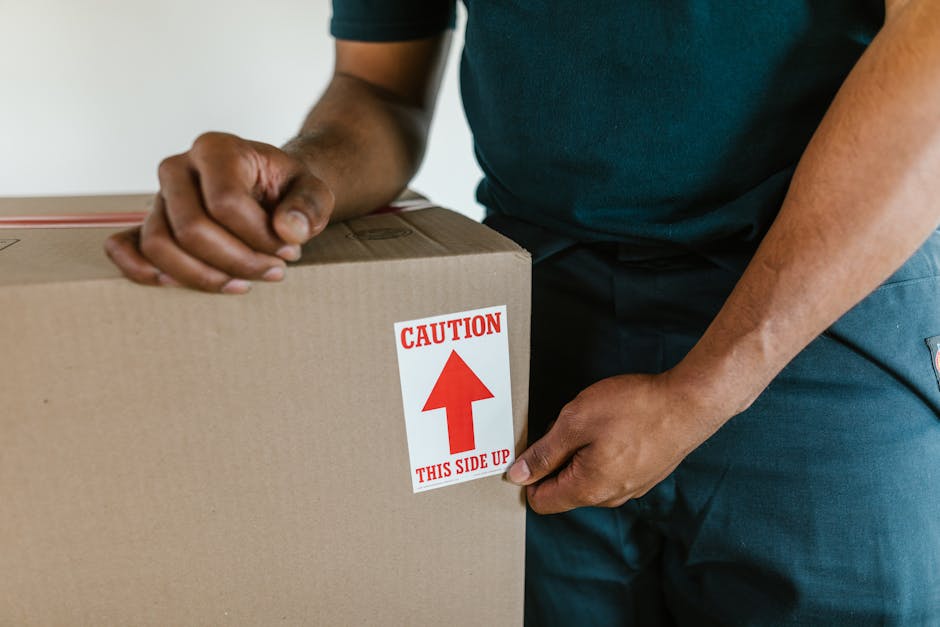
Removals Myths Busted: Is Full Insurance Always Needed?

Moving house or office tends to bring out all sorts of advice, and not all of it is helpful. One of the biggest myths is that you always need full insurance for every removal, no matter how small, simple, or well-packed the move is. The truth is a bit more nuanced. Removals Myths Busted: Is Full Insurance Always Needed? is really a question about risk, value, responsibility, and peace of mind. In some moves, full cover makes perfect sense. In others, it may be more than you need, especially if the service already includes sensible protection measures and the items being moved are low-risk.
This guide breaks down what full insurance usually means, when it is worth paying for, when it may be optional, and how to judge the real level of protection you need. If you are comparing a man and van service against a more comprehensive move, or planning a larger relocation with home moves support, the insurance question can shape both cost and confidence. Let's make it plain, without the waffle.
Why This Question Matters
Insurance sounds like a box-ticking exercise until something gets scratched, dropped, delayed, or lost. Then it suddenly becomes the part everyone wishes they had read properly. That is why the myth around "always needing full insurance" matters so much: it can lead people to overspend, under-protect, or misunderstand what is actually included in their removal service.
In practice, the right level of cover depends on what you are moving, how far it is travelling, how fragile it is, and who is handling it. A one-bedroom flat move with a few bags, boxed kitchen items, and a sofa is a very different beast from a full office relocation or a house filled with antique furniture. Full insurance is not automatically wrong. It is just not automatically the answer either.
The bigger issue is expectation. Some customers assume a removal company is responsible for every risk from the moment the first box is lifted. Others assume standard liability works like full-value cover. Both assumptions can be expensive mistakes. To be fair, insurance wording is rarely written in the calm, normal language people want on moving day. That is why clear comparison and honest questions matter.
Expert summary: Full insurance is most useful when the total replacement value is high, items are fragile or irreplaceable, access is awkward, or the move involves multiple handling points. For lower-risk, straightforward moves, a lighter cover arrangement may be enough if you understand exactly what is and is not protected.
If you are planning a commercial move, it is worth looking at the different risk profile involved. A business relocation may need more structured cover than a standard domestic move, especially if sensitive equipment or time-critical documents are involved. Services such as commercial moves and office relocation services often require a more careful conversation about safety, packing, access, and responsibility. That conversation is where good decisions are made.
How Removal Insurance Usually Works
Removal insurance is not one single product. In the UK removals world, the word usually covers a few different layers of protection. The exact names vary by provider, but the structure is usually similar. Understanding the layers is the key to avoiding confusion.
Common cover types you may come across
- Goods in transit cover: Protection while items are being transported.
- Public liability cover: Protection if a third party is injured or property is damaged during the move.
- Storage cover: Protection if your belongings are held in temporary storage.
- Optional enhanced or full-value cover: Broader protection that may better reflect the replacement value of your possessions.
Standard cover usually focuses on the moving process itself. Full insurance, on the other hand, tends to be more comprehensive and may better reflect the true value of your items. But here is the catch: it often depends on conditions. Items may need to be packed properly, fragile goods may need specialist wrapping, and high-value objects may need to be declared in advance. If you skip that part, even the best cover can become less useful than you expected. Annoying? Absolutely. Common? Also yes.
For many people, the practical question is not "Is insurance included?" but "What exactly is included, when does it apply, and what do I need to do to avoid invalidating it?" That is the stuff that matters. A tiny tear in a box is one thing. A cracked TV screen because it was packed loosely behind soft furnishings is another. The policy may treat those differently, and rightly so.
If you are hiring a vehicle or a team for a more flexible move, such as man with van support or removal truck hire, the insurance conversation can be even more important. Smaller, more modular services are often chosen for convenience and cost, but the customer should still know how the risk is covered from loading to unloading.
And yes, the paperwork can feel a bit dry. Nobody gets excited about policy wording on a rainy Tuesday morning. But a five-minute read now can save a very long argument later.
Key Benefits and Practical Advantages
Full insurance is not just about worst-case thinking. In the right situation, it brings real practical benefits. It can reduce stress, support higher-value moves, and make the process feel more controlled. That calm has value, even if it does not show up on the invoice.
- Better protection for expensive belongings: Useful for electronics, fine furniture, artwork, or custom items.
- Less financial exposure: If something goes wrong, your out-of-pocket cost may be lower.
- More confidence during complex moves: Helpful when access is awkward or there are multiple stops.
- Clearer decision-making: You know where responsibility starts and ends.
- Stronger peace of mind: Especially valuable during high-pressure moving days.
There is also a quieter benefit: better planning. When customers choose cover thoughtfully, they often pack more carefully, label more clearly, and ask better questions. That tends to improve the whole move. Funny how that works.
For families using house removalists or arranging home moves, the main benefit is often emotional rather than financial. You can sleep a bit easier knowing that the expensive mirror, the old dining table, or the laptop box has some backup. For businesses, the benefit is continuity. A damaged server, chair bundle, or printer stack can create irritation nobody has time for.
That said, insurance is not a substitute for good handling. A policy is not magic dust. Proper packing, sensible loading, clean access routes, and careful lifting still do most of the hard work.
Who This Is For and When It Makes Sense
Full insurance is not for everyone, and that is fine. The real question is whether your move has enough value or enough complexity to justify it. If the answer is yes, the cover is probably worth it. If not, you may prefer a more modest arrangement and spend the budget on stronger packing or professional handling instead.
Full insurance often makes sense for:
- Homes with high-value furniture, electronics, or collectibles
- Moves with awkward access, stairs, lifts, or tight parking
- Long-distance removals with more time on the road
- Office relocations involving IT equipment or confidential materials
- Customers who simply want less financial risk, full stop
You may not need full insurance if:
- Your move is small and low-value
- Most items are replaceable at modest cost
- You have packed everything carefully and the route is straightforward
- The service already includes suitable basic cover for the job
A good example is a student move across town with a few boxes, a desk, a bed frame, and not much else. In that case, full insurance might be more than necessary, especially if the items have limited replacement value. On the other hand, moving a large family home with delicate glass cabinets and an upright piano is a completely different conversation.
People also forget the role of service style. A hands-on packing service, such as packing and unpacking services, may reduce risk before the van even sets off. That can change the amount of insurance you need. Less risk in the box means less risk on the road. Simple, really.
Step-by-Step Guidance
If you are not sure whether full insurance is needed, use a practical decision process instead of guessing. The goal is to match cover to the move, not to panic-buy the most expensive option because the word "insurance" sounds serious. It does sound serious, but still.
- List what is being moved. Write down the high-value, fragile, sentimental, or awkward items first.
- Estimate the real replacement value. Not what you paid years ago. What it would cost to replace now.
- Check the service type. Small local moves, man and van jobs, and full removals can carry different risk profiles.
- Ask what basic cover is already included. Do not assume. Ask plainly.
- Read the conditions for fragile or high-value items. You want to know whether items must be boxed, declared, or professionally packed.
- Look at the access route. Long carries, awkward stairs, narrow hallways, or unreliable parking can increase risk.
- Compare the cost of cover with the cost of loss. A little premium can be sensible if one accident would sting badly.
- Make the final call based on total exposure, not fear. There is a difference.
It can help to picture the move in segments: the packing stage, the loading stage, the journey, unloading, and reassembly. Where is the biggest risk? Where are the most hands on the item? Where would damage be hardest to reverse? Those questions are more useful than a generic "Should I get full insurance?" on its own.
If your move includes a vehicle choice, such as moving truck or a smaller flexible setup, remember that vehicle size is only one part of the story. Handling, packing, and insurance conditions matter just as much. Big van, small van, same problem if the lamp is wrapped badly and wedged under a suitcase.
Expert Tips for Better Results
Here is the advice that tends to save people money and hassle in the real world. None of it is glamorous. All of it matters.
- Photograph your valuables before the move. It gives you a clear record of condition and can help if something needs to be discussed later.
- Keep small valuables with you. Passports, jewellery, cash, and private paperwork are usually better carried personally.
- Use proper packing for fragile items. If it rattles, it is not packed well enough.
- Separate sentimental items from everything else. These are often the hardest to replace and the most upsetting to lose.
- Ask about exclusions before booking. Some items may need special treatment or may not be covered at standard levels.
- Match the service to the job. If you need help with one item or a single room, furniture pick-up might be more suitable than paying for a larger moving setup.
A useful little habit is to ask yourself: "If this one item broke, would I shrug or would I be genuinely upset?" That answer often tells you whether extra cover is worth it. Not every object deserves premium protection, but some absolutely do.
And yes, if the moving day is already a bit chaotic, with boxes in the hall and the kettle somewhere you can't find, don't make insurance decisions in a rush. That is how people buy the wrong cover. Calm head, quick review, done.
Common Mistakes to Avoid
Most insurance problems in removals are not caused by bad luck alone. They are caused by assumptions. Here are the common ones that trip people up.
- Assuming "insured" means fully insured. It often does not.
- Forgetting to declare high-value items. Some cover only applies once items are listed or agreed in advance.
- Packing fragile items badly. A policy may not help if the item was not packed appropriately.
- Ignoring exclusions. Every policy has limits. The question is whether those limits matter to you.
- Choosing the cheapest quote without checking the cover. Cheap can be fine. Cheap and unclear is where trouble starts.
- Leaving important items in the wrong pile. That happens more often than people admit.
Another classic mistake is assuming the company will "sort it out later" without clear evidence. If there is damage, photos, notes, and a clear inventory help enormously. A polite, factual record beats a vague memory every time.
There is also a timing mistake. People sometimes decide on cover after the van has been booked, the boxes are sealed, and the stress levels are already high. Better to decide while you are still able to think straight. The brain is a useful tool, apparently.
Tools, Resources and Recommendations
You do not need specialist software to make a sensible insurance decision. A simple approach is usually enough. What you do need is a bit of structure.
- Inventory list: A written list of the main items being moved.
- Phone camera: For dated photos of condition before packing and loading.
- Box labels: To flag fragile, heavy, or high-value contents.
- Basic measurements: Helpful for furniture, access, and truck planning.
- Questions list: A short note of what you want to ask before accepting any quote.
If you are comparing costs and cover, it helps to review the provider's information on pricing and quotes alongside their approach to insurance and safety. Those pages should help you understand how a company thinks about risk, not just price.
You may also want to check operational and policy pages where relevant, especially if security, accessibility, or payment method matters to you. For example, payment and security can be useful when you are choosing a provider, while health and safety policy gives another clue about how seriously handling risk is taken. Small signals, but telling ones.
And for customers who care about responsible disposal and the wider move footprint, recycling and sustainability can be part of a more considered moving plan. Not directly insurance, no. Still relevant to the overall quality of the service.
Law, Compliance, Standards, and Best Practice
Insurance in removals is partly a legal and contractual question, but it is also a practical service question. UK providers should be clear about what they cover, what they exclude, and what the customer is expected to do. You should never have to guess at the basics.
In plain English, best practice means:
- Clear terms before the move starts
- Transparent explanation of cover levels
- Reasonable care with goods in transit
- Proper handling of fragile or high-value items
- Honest discussion of limitations and exclusions
If a quote sounds vague, ask for clarification. If something seems too broad to be true, it probably needs a second look. That is not cynicism; it is just sensible. The point is not to distrust every company, but to understand the deal you are entering.
For business moves, the compliance discussion is often sharper. Office relocation can involve confidential records, IT equipment, site access rules, building management requirements, and timing constraints. In those situations, insurance choice should be tied to the real operational risk, not just a generic assumption that "full cover" is always the safest shout. Sometimes it is. Sometimes it is overkill. Context matters.
Options and Comparison Table
There is no single insurance setup that suits every move. The best option depends on value, complexity, and tolerance for risk. This comparison should help you think clearly.
| Option | Best For | Typical Strengths | Possible Downsides |
|---|---|---|---|
| Basic included cover | Small, low-value, straightforward moves | Lower cost, simple setup | May not fully reflect replacement value |
| Goods in transit cover | Most standard removals | Protects items during transport | May have exclusions or packing conditions |
| Full-value or enhanced insurance | High-value, fragile, or complex moves | Broader peace of mind, stronger financial protection | Higher cost, more rules to follow |
| Minimal cover with strong packing | Lower-value moves where the main risk is manageable | Good value if items are replaceable | Less protection if something unexpected happens |
This is where a lot of people have their little lightbulb moment. They realise the real choice is not "insured or not insured." It is "Which balance of protection, price, and responsibility makes sense for this move?"
If the move involves specialist transport, a more hands-on approach may be helpful. Some customers prefer a larger vehicle or a dedicated hire arrangement, which is where services like moving truck and removal truck hire may become relevant. The insurance you need should reflect the route, the load, and the handling involved, not just the vehicle size.
Case Study or Real-World Example
Here is a realistic example. A couple moving from a two-bedroom flat to a terrace house in London had a mix of practical items and a few more precious pieces: a glass coffee table, a large TV, and a vintage sideboard inherited from family. At first, they assumed basic cover would be enough because the move was only a few miles.
Once they listed the items properly, the picture changed. The sentimental value of the sideboard was far beyond its resale value, the TV was expensive to replace, and the access at the new house was awkward because of a narrow hallway and stairs near the front door. Full insurance started to look less like a luxury and more like a sensible buffer.
On the other hand, they did not need to insure every box at the highest level. Their clothes, books, kitchenware, and office supplies were all packed securely and easily replaceable. In the end, they chose stronger cover for the key items and kept the rest under the standard arrangement. That felt balanced, and it was. No drama, no overspend, no nagging worry on the day.
A different move, say a small flat move with flat-pack furniture, a desk, and everyday household goods, might have justified a different decision entirely. That is the point. Insurance should follow the move, not the myth.
Practical Checklist
Use this checklist before you confirm your moving plan. It is simple, but it catches a lot.
- Have I listed my high-value and fragile items?
- Do I know what cover is already included?
- Have I asked about exclusions and conditions?
- Are any items likely to need special packing?
- Do I know the replacement value of the most important belongings?
- Have I considered access issues like stairs, parking, or long carries?
- Have I compared insurance cost with potential loss?
- Have I taken photos of valuable items before the move?
- Do I understand the claims process if something goes wrong?
- Have I chosen the right service type for the size of the move?
If you can tick most of those off, you are already ahead of many people. Seriously. Most moving problems start where assumptions replace planning.
For readers still comparing providers, it can also help to review the company's wider information pages, such as about us and terms and conditions, to understand how they work and what you are agreeing to before anything is loaded into a van.
Conclusion
So, is full insurance always needed? No. Not always. But it is often worth serious consideration when the move is high-value, high-risk, or emotionally important. The best decision is the one that matches your belongings, your route, your budget, and your tolerance for uncertainty.
The real myth to bust is not that insurance matters. It is that there is one perfect level of cover for every move. There isn't. A thoughtful, case-by-case approach usually gives you better protection, better value, and a lot less stress on the day.
Whether you are planning a smaller local job, a larger family move, or a more complex commercial relocation, make the cover decision with your eyes open. Ask questions. Read the details. Protect the things that matter most. That little bit of care goes a long way.
Get a free quote today and see how much you can save.
And if nothing else, you will sleep better the night before the van arrives. Which, let's face it, is worth quite a lot.
Frequently Asked Questions
Is full insurance always needed for removals?
No. Full insurance is useful in many situations, but it is not automatically necessary for every move. The right level of cover depends on the value of your belongings, how fragile they are, and how complex the move is.
What does removal insurance usually cover?
It often covers goods in transit, and sometimes public liability or storage-related risks, depending on the provider. The exact scope varies, so always check what is included and what conditions apply.
Is basic cover enough for a small house move?
Sometimes, yes. If the items are low-value and the move is straightforward, basic cover may be enough. But if you have anything expensive, fragile, or difficult to replace, you may want more protection.
Do I need full insurance for a man and van service?
Not always, but it is worth checking carefully. A smaller service can still involve risk, especially if you are moving valuable items or using awkward access points. The service type should influence the cover decision.
What should I ask before agreeing to insurance?
Ask what is included, what is excluded, whether high-value items must be declared, and whether items need special packing. Those answers matter more than a generic yes/no about insurance.
Does packing my items properly affect insurance?
Very much so. Good packing can reduce the chance of damage and may also be required for certain cover conditions. Loose packing can weaken a claim if something gets damaged.
Is full insurance worth it for antiques or artwork?
Often, yes. Items that are rare, fragile, or sentimental are usually the strongest candidates for enhanced cover because replacement is difficult or impossible.
Can I insure only certain items?
In many cases, yes. Some customers choose stronger cover for a few key pieces and standard cover for the rest. That can be a sensible middle ground if the move includes both expensive and everyday items.
How do I know if a quote includes enough protection?
Read the terms, ask specific questions, and compare the cover against the value of what you are moving. A low quote is not a good deal if the protection is too thin for your belongings.
Do office removals need more insurance than home moves?
Often they do, because office relocations can involve IT equipment, records, and business interruption risks. Services such as commercial moves and office relocation services usually need a more structured conversation about cover.
What is the biggest mistake people make with removals insurance?
The biggest mistake is assuming that "insured" means "fully protected no matter what." The next biggest is failing to read exclusions. Both can lead to avoidable disappointment.
Where should I look for more details before booking?
Check the provider's information on insurance, safety, pricing, and terms before you commit. It is a small bit of homework, but it can save a lot of stress later.