Secure Loading Techniques Movers Use for Fragile Loads
Fragile items do not fail politely. A glass cabinet shudders on a corner, a boxed lamp slides an inch too far, and suddenly the whole load becomes a worry. That is why Secure Loading Techniques Movers Use for Fragile Loads matter so much in a real move. It is not just about wrapping things well. It is about how items are layered, supported, restrained, and protected once they are inside the vehicle.
Whether you are moving a family home, a small office, or a single piece of delicate furniture, the loading stage is where careful work pays off. A lot. In this guide, we will break down the methods movers use, why they work, the mistakes that cause damage, and how to judge whether a loading plan is genuinely safe. If you are comparing moving options, you may also find it useful to look at home moving support or packing and unpacking services for a more hands-off approach.
Let's face it: fragile loads are never just "fragile". They can be awkward, heavy in the wrong places, and oddly shaped. That is what makes loading technique so important. Done properly, it reduces breakage, stops shifting, and keeps the whole move calmer from start to finish.
Table of Contents
- Why Secure Loading Techniques for Fragile Loads Matters
- How Secure Loading Techniques Work
- Key Benefits and Practical Advantages
- Who This Is For and When It Makes Sense
- Step-by-Step Guidance
- Expert Tips for Better Results
- Common Mistakes to Avoid
- Tools, Resources and Recommendations
- Law, Compliance, Standards, or Best Practice
- Options, Methods, or Comparison Table
- Case Study or Real-World Example
- Practical Checklist
- Conclusion
- Frequently Asked Questions
Why Secure Loading Techniques Movers Use for Fragile Loads Matters
Loading is where the move stops being theoretical and starts becoming physical. Boxes are no longer sitting still in a hallway. They are in a van, on a lorry, or stacked in a truck that will brake, corner, and bounce over everyday roads. A load that looks fine in the property can become unstable after five minutes on the road.
Fragile items are vulnerable in three main ways: impact, compression, and movement. Impact happens when something is knocked or dropped. Compression happens when a heavy item sits on something delicate. Movement is the sneaky one. A box does not need to fall to be damaged; it only needs to slide, tip, or rub against another item.
That is why movers think beyond "put it in the vehicle". They build a load with restraint in mind. They place heavier items low, cushion delicate surfaces, and use straps or fillers to stop empty gaps turning into little runways for movement. It sounds simple, but the difference between a loose and secure load is often the difference between arriving intact and arriving with a story nobody wants to tell twice.
Expert summary: secure loading is not one single trick. It is a chain of small decisions: how the item is packed, where it sits in the vehicle, what supports it, and what stops it shifting in transit.
For larger or more complex moves, this is especially relevant. A business moving equipment may need commercial moving support, while a homeowner with bulky, delicate furniture may want to understand house removalists before choosing a service.
How Secure Loading Techniques Movers Use for Fragile Loads Works
The process starts before anything goes into the vehicle. Good movers first assess the shape, weight, fragility, and stackability of each item. A porcelain lamp, a framed mirror, and a flat-pack box full of books do not belong in the same category, even if they all fit in the same room. That assessment informs the load plan.
After that comes sequencing. Items that can support weight go in first. Delicate items are placed where they are less likely to be crushed or jolted. Upholstered pieces, padded wraps, and boxed valuables may be used as soft barriers between harder objects. Think of it as building a layered structure rather than a random pile.
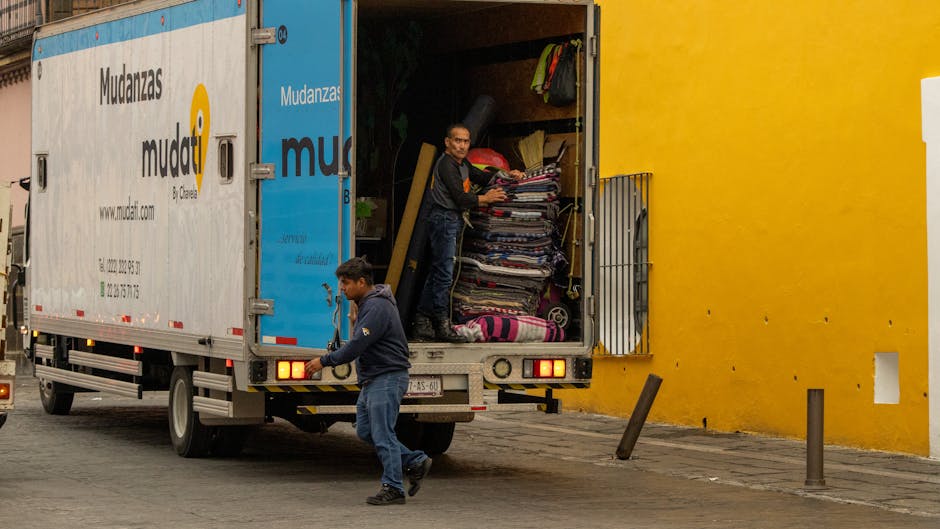
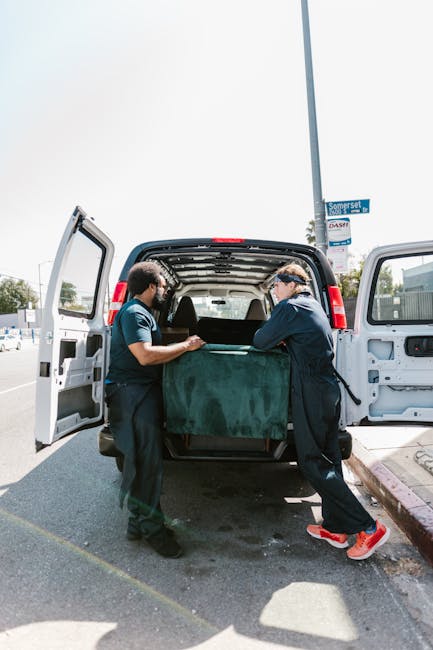
The vehicle itself matters too. Movers often use tie-down points, straps, blankets, corner guards, and load bars to secure the cargo. These tools are not decorative. They prevent the load from settling unevenly when the van turns, stops suddenly, or drives over a rough patch of road. Even a smooth trip through London traffic can produce enough side-to-side movement to damage fragile goods if they are not restrained properly.
In many moves, the loading logic follows a few simple principles:
- Heavy items stay low and close to the vehicle floor.
- Fragile items are cushioned on all sides, not just underneath.
- Empty spaces are filled so items cannot slide into each other.
- Soft items are used to separate harder or sharper objects.
- The final load is checked for movement before departure.
If the move involves awkward access, narrow hallways, or multiple stops, services such as man and van or man with van can be useful, especially where careful handling and flexible loading matter more than size alone.
Key Benefits and Practical Advantages
The obvious benefit is less damage. But there is more to it than that, and to be fair, that is only the starting point.
- Reduced breakage: the load stays stable, so fragile items are less likely to knock against hard surfaces or each other.
- Better use of space: a planned load usually fits more efficiently than a rushed one.
- Faster unloading: when items are secured logically, they are easier to access in the right order.
- Less stress for the customer: you are not left wondering whether your favourite lamp has survived the journey.
- Safer handling: movers can lift, secure, and transport items with fewer awkward surprises.
There is also a subtle but important benefit: confidence. When a mover loads fragile goods properly, the whole move feels more controlled. That calm matters. You notice it in the pace of the team, the way they pause before stacking, the small checks before the doors close. It is the sort of detail that is easy to miss until it is missing.
For particularly bulky or valuable items, choosing the right vehicle can make a major difference. A well-suited moving truck or removal truck hire option can reduce stacking pressure and improve load security straight away.
Who This Is For and When It Makes Sense
Fragile loading techniques are not only for antiques or high-value art. In real life, plenty of ordinary moves contain delicate items that deserve the same care. Think family crockery, mirror-front wardrobes, TVs, glass shelves, lamps, office monitors, printers, framed prints, and kitchen equipment with awkward surfaces.
This matters most when:
- you are moving glass, ceramics, or electronics;
- items have unusual shapes or exposed corners;
- the journey involves bumpy roads, stairs, or multiple transfers;
- the vehicle is not full, so items might slide;
- you have a large volume of items and need structured loading;
- you are moving an office where monitors, server-related kit, or desks need controlled placement.
Office customers often underestimate loading risk. A monitor can look safe in its box, but if the box tips under a stack of files, that neat packaging quickly stops being enough. For relocations like this, office relocation services can be worth considering because they tend to involve more systematic handling.
Sometimes the need is smaller but still important. Maybe it is a single fragile sideboard, a dining table with a glass top, or a beloved set of dishes from your gran. Moving one precious thing can be just as nerve-racking as moving twenty. Probably more, if we are honest.
Step-by-Step Guidance
Here is how secure loading usually works in practice. This is the part many readers find most useful, because it turns a vague idea into something you can actually picture.
- Sort fragile items before moving day. Group glass, electronics, framed items, and delicate furniture together. If you know what is fragile, you can plan the load instead of guessing at the kerbside.
- Use proper packing. Boxes should be sturdy, sealed cleanly, and labelled clearly. Loose fills, bubble wrap, paper, and blankets all help, but only if they are used generously enough. Half-measures tend to fail at the back of the van.
- Create a loading order. Put robust, heavy, and stable items in first. Build around them. Fragile boxes are normally placed where they will not be crushed, often above heavier foundations but never unsupported.
- Protect contact points. Corners, legs, edges, and glass surfaces need separation. Movers use blankets, pads, cardboard sheets, or foam to stop hard contact.
- Fill voids. Empty spaces are a problem. If something can shift, it eventually will. Soft items, padding, or suitable fill materials reduce movement.
- Secure the load. Straps, load bars, and anchor points keep items from drifting. The aim is not to squeeze everything rigidly. It is to stop motion while keeping pressure even.
- Check before closing the vehicle. A proper final check includes a gentle test for movement, a look at stacking stability, and a quick review of what might be vulnerable on the road.
That final check sounds obvious, I know. But it is often the moment that catches a hidden problem, like a box standing slightly proud or a chair leg pressing into another item. Tiny issue, big consequence.
Expert Tips for Better Results
There are a few habits that experienced movers rely on because they work, plain and simple.
- Pack by fragility, not just by room. A bathroom box can contain sturdy bottles and fragile glass. A kitchen box can contain both plates and tins. Sort by breakability before anything else.
- Keep the heaviest fragile items low. Some fragile things are also dense, like a boxed appliance or a stone decorative object. Weight and fragility are not opposites.
- Use a "soft wall" approach. Place blankets or padded items between hard surfaces to reduce friction and sudden knocks.
- Don't overfill boxes. A box that bulges is harder to stack securely. It is also more likely to split at the worst possible moment.
- Label clearly on multiple sides. If a box can only be identified from one angle, it is more likely to be handled roughly by accident.
- Plan for the unload too. Secure loading is only half the job. The order you load in should also make unloading sensible and safe.
One tiny but useful observation: movers often protect fragile loads better when they are not rushed. That sounds like common sense, but in a busy property the clock can become the enemy. A good team keeps a steady pace instead of a frantic one. You can usually feel the difference within minutes.
If you are deciding between different levels of support, it is worth reviewing pricing and quotes alongside the actual loading approach offered. The cheapest quote is not always the best value if fragile items are involved.
Common Mistakes to Avoid
Most loading damage comes from a handful of predictable mistakes. The good news is that they are avoidable.
- Leaving empty spaces in the vehicle: gaps let items move, and once movement starts, little knocks become bigger ones.
- Stacking fragile items too early: delicate boxes should not be the foundation for heavier cargo.
- Using weak boxes: old boxes, damp boxes, and overused cartons collapse more easily under pressure.
- Mixing sharp and soft items without separation: a single sharp edge can ruin a fragile surface in transit.
- Relying on wrapping alone: wrapping helps, but it does not replace a secure load plan.
- Ignoring access routes: narrow turns, stairs, and long carries all increase the chance of bumps and dropped items.
One mistake that gets overlooked is emotional packing. People sometimes pack the most precious thing last, in a rush, because they keep changing their mind. That tends to produce weak boxes and rushed decisions. Better to set those items aside early and treat them properly from the start.
And yes, it can feel a bit obsessive. But when the item matters, being careful is not overdoing it. It is just sensible.
Tools, Resources and Recommendations
Movers use a mixture of packing materials and vehicle equipment to secure fragile loads. You do not need every single item on earth, but the right combination matters.
| Tool or Material | What It Does | Best Use |
|---|---|---|
| Moving blankets | Cushion hard surfaces and reduce rubbing | Furniture, mirrors, framed pieces |
| Straps | Hold items in place during transit | Large boxes, furniture, stacked cargo |
| Load bars | Create a physical barrier against shifting | Partial loads, mixed cargo, long journeys |
| Corner protectors | Reduce pressure on vulnerable edges | Tables, cabinets, framed items |
| Sturdy cartons | Provide structural support for packed items | Household goods, crockery, electronics |
| Void fill | Stops items sliding into empty spaces | Mixed loads and irregular shapes |
For many household moves, a practical mix of professional packing help and careful transport is enough. For smaller or simpler jobs, a man with van option may suit you if the loading plan is handled properly. For larger homes, you may want to compare that with a full home moves service.
If you are moving items you no longer need, it can also help to arrange responsible disposal rather than squeezing everything into the same load. The page on furniture pick up is a useful place to start when you want to separate what is moving from what is leaving.
Law, Compliance, Standards, or Best Practice
For fragile loading, the most relevant guidance is usually about safe handling, road safety, and the secure transport of goods. In UK moving work, reputable companies generally follow internal health and safety procedures, use suitable equipment, and make sure loads are stable before the vehicle moves off. That is the practical baseline most customers should expect.
It is also sensible for movers to consider insurance arrangements and to be clear about what is covered, what is excluded, and what the customer needs to declare in advance. Fragile items often need special handling, and special handling should be discussed openly rather than assumed. If you want to explore that side in more detail, the page on insurance and safety is a relevant place to look.
Best practice usually includes:
- using the right vehicle for the volume and type of load;
- training staff to lift and stack safely;
- securing loads so they do not shift under normal road conditions;
- labeling and separating fragile items appropriately;
- keeping clear records of customer instructions where needed.
If you are comparing providers, ask how they manage fragile items, what materials they use, and whether they have a clear complaints process if something does go wrong. A straightforward company should be able to explain all of that without sounding defensive. That tells you a lot.
For general business transparency and secure transactions, it may also be worth reviewing payment and security before booking. Not because every move is complicated, but because clear expectations are part of a trustworthy service.
Options, Methods, or Comparison Table
There are different ways to secure fragile loads, and the right choice depends on what you are moving. Here is a practical comparison.
| Method | Best For | Strengths | Limitations |
|---|---|---|---|
| Blanket wrapping | Furniture, mirrors, framed pieces | Good surface protection, easy to apply | Does not stop all movement on its own |
| Boxing and void fill | Household items, small valuables | Supports shape and reduces internal shifting | Needs strong cartons and careful packing |
| Strapping and anchoring | Mixed vehicle loads, larger items | Excellent for transit stability | Requires suitable anchor points and know-how |
| Layered loading | Full home or office moves | Efficient and adaptable | Can go wrong if heavy items are placed poorly |
| Dedicated fragile section | High-value or delicate cargo | Simple to monitor and protect | May reduce space efficiency |
In practice, movers often combine methods. For example, a framed mirror might be blanket wrapped, placed in a dedicated section, and braced with soft cargo so it cannot drift. That layered approach is usually stronger than relying on one thing alone.
Case Study or Real-World Example
Here is a realistic example from an everyday move. A family is moving from a two-bedroom flat into a house. They have a glass dining table, four framed prints, several boxes of kitchenware, and two lamps with awkward bases that never sit upright quite right. Nothing outrageous, but plenty to worry about.
The movers start by separating fragile items from general boxes. The table top is wrapped, the corners are protected, and the frames are loaded vertically so they are not sitting flat under pressure. Kitchen boxes are kept small enough to lift securely, rather than overfilled with mixed contents. Lamps go into reinforced cartons with padding around the neck and base.
In the vehicle, the heaviest items go in first. Soft furnishings are used to create buffer zones, and the glass table is positioned where it cannot tip or be pinned by later items. Before departure, the team checks that there is no free movement when the vehicle is gently rocked. The load is not "tight" in a forceful sense; it is stable. There is a difference.
What made this move work well was not one expensive tool. It was the sequence. The fragile items were treated as fragile from the moment they were packed, and the loading plan respected that. Simple. Not easy, but simple.
For customers with complex household moves, a more structured service such as house removalists can be worth considering because it keeps fragile handling consistent from packing through to unloading.
Practical Checklist
Use this checklist before the van doors close. It is short, but it catches a lot.
- Fragile items have been separated from general household goods.
- Boxes are strong, sealed, and not overfilled.
- Delicate surfaces are wrapped or cushioned on all sides.
- Heavy items are positioned low and stable.
- Empty spaces in the vehicle have been filled or blocked.
- Straps, blankets, or load bars are in place where needed.
- Sharp edges are not touching soft or glass surfaces.
- Items likely to move have been checked by hand before departure.
- The unload order has been thought through.
- Any special handling instructions have been shared clearly.
If you can tick all of that off, your odds of a smooth arrival go up fast. Not perfect, nothing is. But much better.
Conclusion
Secure loading is one of those moving skills that only looks invisible when it has been done properly. The best moves do not feel dramatic. They feel organised, calm, and a bit unremarkable, which is exactly what fragile items need. Good loading technique protects more than objects; it protects time, money, and peace of mind.
When you understand how movers build a safe load, you can ask better questions, spot stronger service, and choose the right level of support for your situation. That is useful whether you are moving a whole home, a small office, or one very precious item that has to arrive in one piece. Truth be told, that last one can be the one that matters most.
If you are planning a move and want a clearer idea of your options, start by comparing the service level that best fits your load, your access, and your comfort level. A careful move is usually a better move. Simple as that.
Get a free quote today and see how much you can save.
And if the day feels a bit overwhelming, that is normal. A good move has room for nerves, tea breaks, and a few deep breaths.
Frequently Asked Questions
What are secure loading techniques for fragile loads?
They are the methods movers use to stop delicate items from shifting, tipping, crushing, or rubbing during transport. That usually includes careful packing, smart stacking, padding, and restraint inside the vehicle.
Do fragile items need to be loaded last?
Not always. Some fragile items are best loaded near the end, but the real rule is that they must be placed where they will be protected from weight, movement, and pressure. Load order depends on the whole vehicle plan.
What is the safest way to move glass items?
Glass items should be wrapped securely, protected at the corners, and placed so they cannot slide or lean dangerously. Movers often keep them separated from harder items and brace them with soft materials.
How do movers stop boxes from sliding in the van?
They use a combination of stable stacking, void fill, straps, load bars, and the right arrangement of heavier items. If there is empty space, something can move, so filling gaps is a big part of the job.
Can fragile items travel with furniture?
Yes, but only if the load is planned properly. Fragile items should not be crushed by furniture or placed where edges, legs, or corners can damage them. Separation and support matter more than simply fitting everything in.
Is professional packing worth it for fragile loads?
Often, yes. Professional packing can reduce risk because the materials, box sizes, and wrapping methods are usually more suitable for transit. It is especially helpful when you have glassware, electronics, or items with odd shapes.
What should I tell movers about delicate items?
Be specific. Tell them what is fragile, what is valuable, what needs upright transport, and if there are any items that should not be stacked on at all. Clear instructions help more than vague warnings.
Are all moving vans suitable for fragile loads?
No, not automatically. The vehicle needs enough space, the right tie-down points, and a layout that suits the load. A suitable moving truck or removal truck hire option can make a real difference.
How can I tell if a mover is careful with fragile goods?
Look at how they talk about packing, loading order, padding, and securing items. If they explain the process clearly and ask sensible questions about your items, that is a good sign. A rushed "we'll just fit it in" approach is not ideal.
What are the most common causes of damage during loading?
The biggest causes are poor stacking, empty gaps, weak boxes, lack of padding, and overloading delicate items. In other words, damage usually comes from movement or pressure, not from bad luck alone.
Should I choose a man and van service for fragile loads?
It can be a good option for smaller jobs or a few delicate items, provided the provider knows how to secure fragile cargo properly. For larger or more complex loads, a fuller moving service may be more suitable.
What if my fragile item is unusually shaped?
Oddly shaped items need more planning, not less. They may need custom padding, a dedicated space in the vehicle, or extra bracing to stop them leaning or twisting. If in doubt, ask for a loading plan before moving day.